Meal planners are written for families of four, and cooking for one with them means two quiet failures: quantities that feed a crowd, and fresh ingredients bought for a single meal that die in the fridge before their second use. This planner is built for a household of one from the first cell: every portion is for one person, and the grocery list is generated from the plan — not written separately and hoped to match.
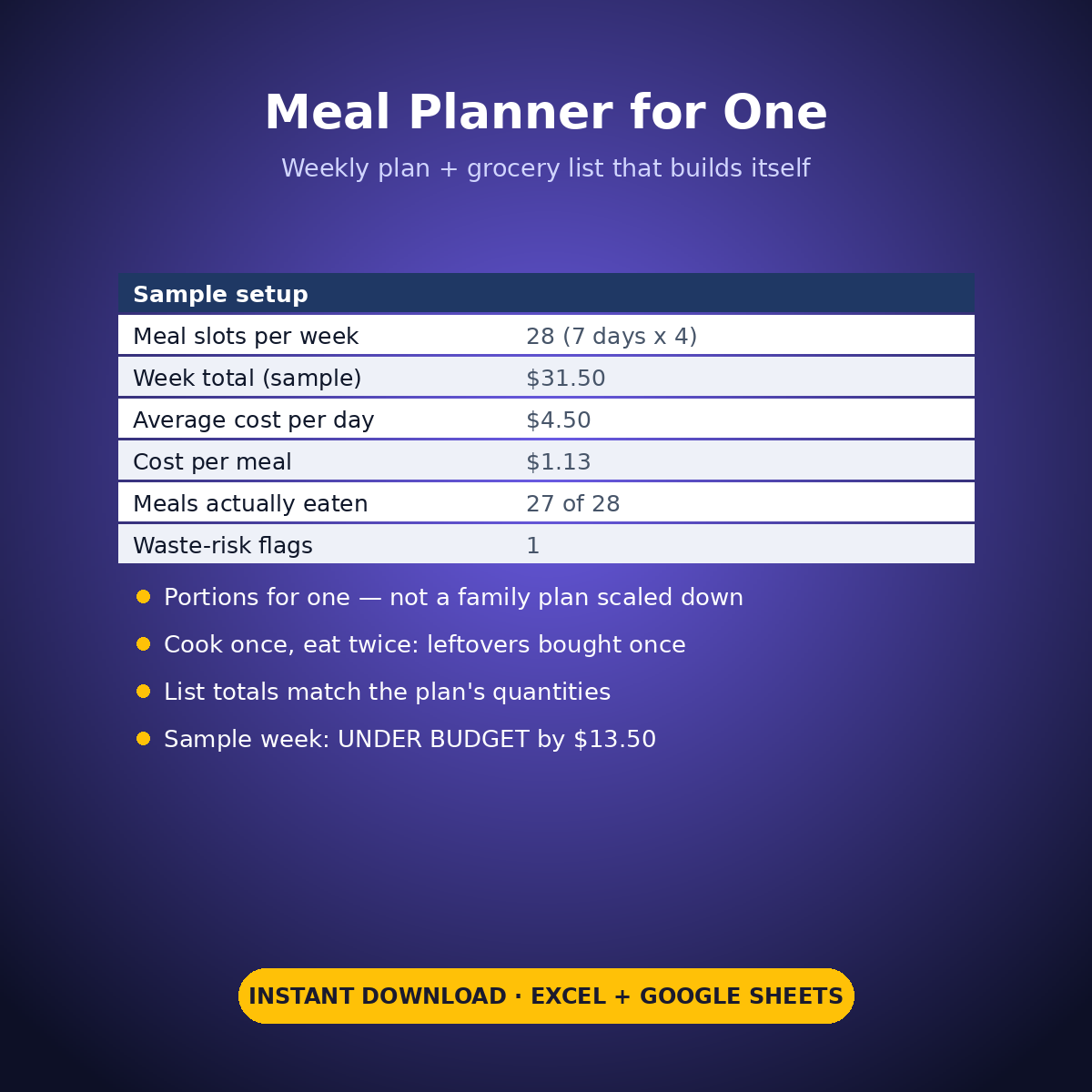
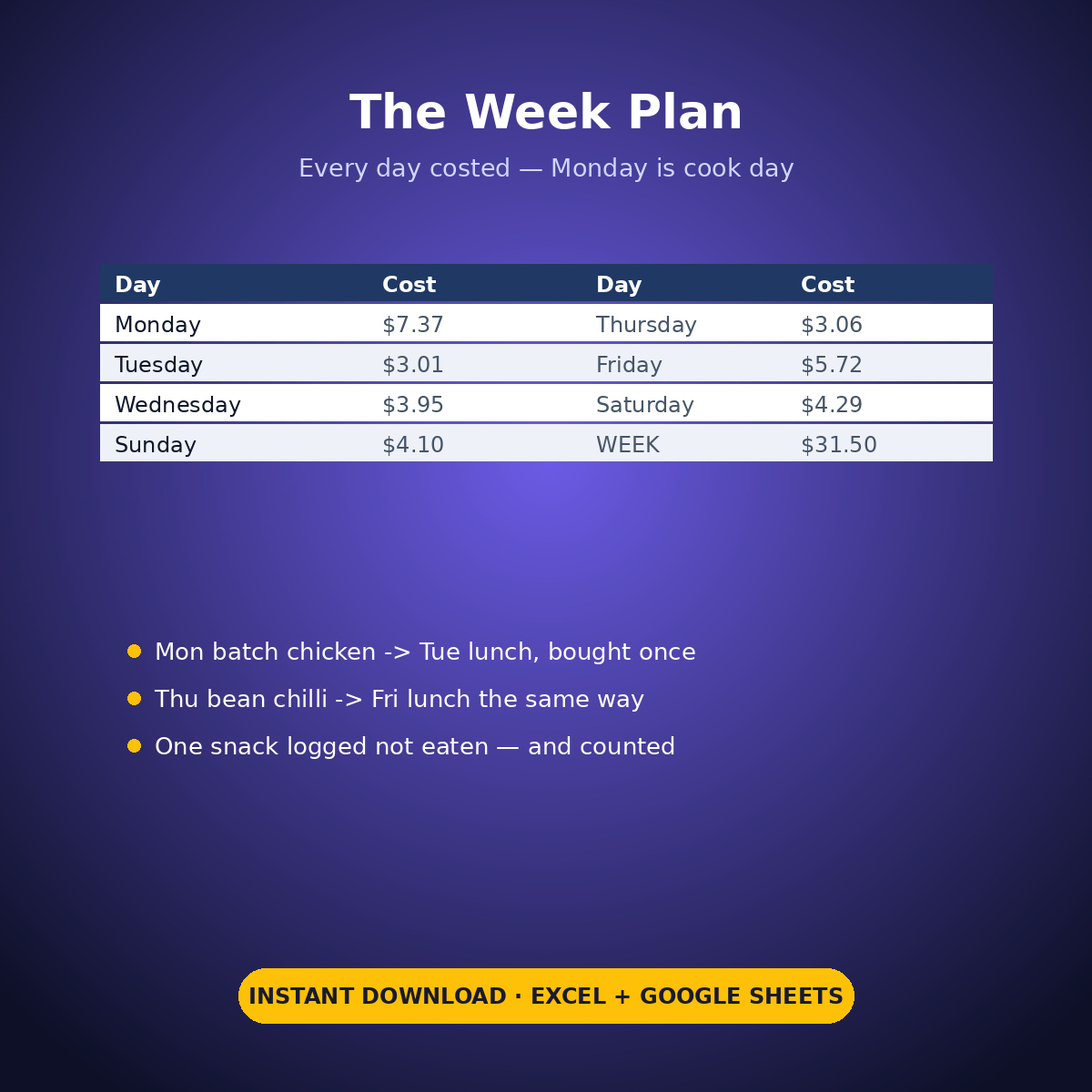
The week is 28 slots — 7 days of breakfast, lunch, dinner and a snack — each with its key ingredient, the quantity for one, and an estimated cost. The sample week totals $31.50 of ingredients: $4.50 a day on average, $1.13 a meal, against a $45.00 sample budget (UNDER BUDGET by $13.50, printed). Monday is the expensive day at $7.37 — because Monday is cook day.
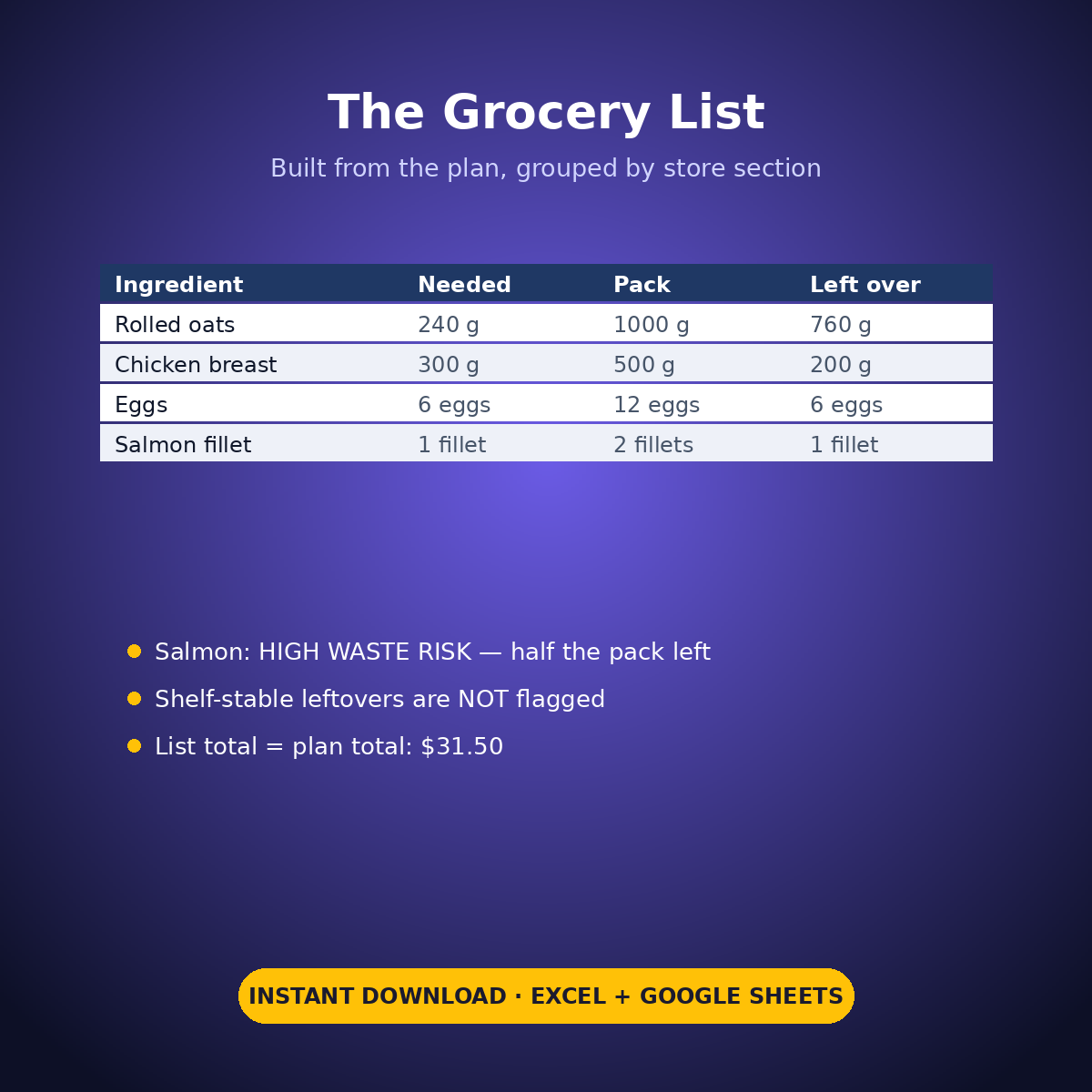
That is the second idea: cook once, eat twice, on purpose. Monday’s dinner is a batch of chicken and rice; Tuesday’s lunch is the leftovers, marked in the link column with a quantity of zero — so the grocery list buys the chicken ONCE, at Monday’s 300g, and never double-buys it. The same link runs Wednesday’s stir-fry into Thursday and Thursday’s bean chilli into Friday. The list that builds itself from the plan groups everything by store section and totals each ingredient across the week — 240g of oats across three breakfasts, 6 eggs across three meals — so the quantities on the list are the quantities in the plan, by construction.
And the waste flag: tell the list the pack size you actually have to buy and whether the food keeps. A perishable pack with half or more left over after the week’s plan gets flagged HIGH WASTE RISK — in the sample, exactly one item earns it: the salmon, one fillet eaten from a two-fillet pack, 1 fillet left over. A half-bag of flour does not get flagged, because flour keeps — that judgement (keeps well? yes/no) stays yours; the arithmetic is the sheet’s. There is also an honesty column — Eaten? — where the sample logs one Tuesday snack as not eaten and counts 27 of 28, because a plan nobody audits is just a wish.
What it does for you:
– Plans a full week for ONE — 28 meal slots, portions and costs per meal, per day, per week
– Builds the grocery list from the plan automatically, grouped by store section, quantities totalled
– Cook-once-eat-twice links: leftovers are marked, so shared ingredients are bought exactly once
– Flags high-waste-risk buys: perishable packs half or more left over after the week
– Tracks planned vs actually eaten, so next week’s plan learns from this one
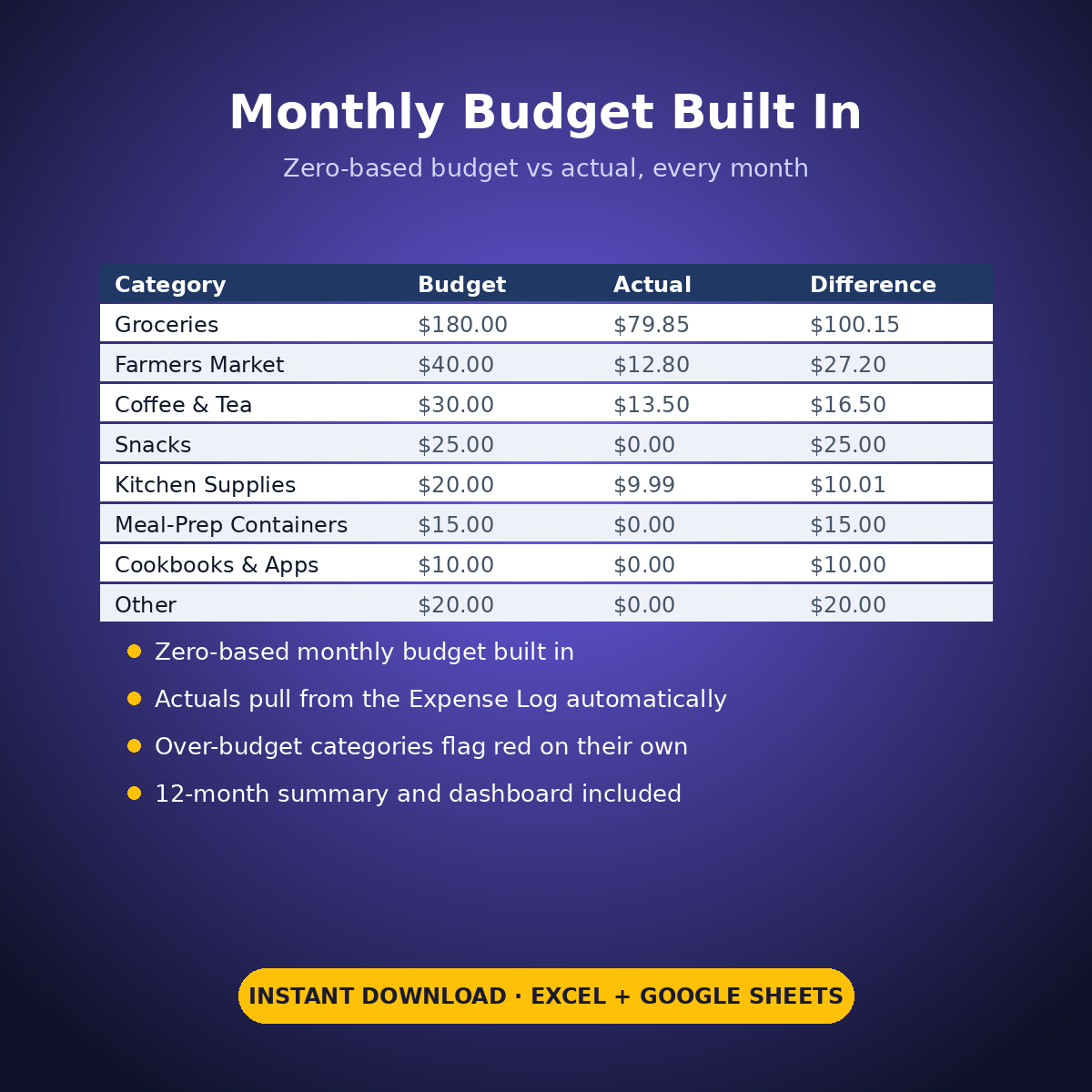
– Plus expense log, zero-based monthly budget, dashboard and monthly summary
What’s inside (.xlsx, works in Excel AND Google Sheets):
– Start Here — setup steps and your weekly budget for one
– Week Plan — a full sample week pre-filled, with the day-by-day cost block and budget verdict
– Grocery List — 17 ingredients totalled from the plan, sections, pack leftovers and the waste flag
– Expense Log, Monthly Budget, Dashboard, Monthly Summary
Instant download. Type only in the yellow cells — formula cells are locked (password: sheetdaily, disclosed on the Start Here tab so you can unlock if you ever need to). Sample week is pre-filled so you can see exactly how it works; clear the yellow cells and type your own. Prices are your own example entries — the sheet plans and totals, it does not quote store prices.
Reviews
There are no reviews yet.