A home baker usually knows what a batch costs in the middle of making it and forgets by the time it is priced. This calculator keeps the number: type each recipe’s ingredient rows and what that quantity costs the batch, and the sheet works out the batch cost, then the cost of one item from it — batch cost divided by your typed yield, plus your typed packaging cost per item.
The inputs are bakery inputs only — flour, butter, eggs and their kin, costed per recipe. Costing a batch of candles is the Handmade Candle Business Cost Calculator’s work, a bar of soap is costed in the Soap Maker Batch Cost Calculator from oils and fats per batch, and a piece of jewellery in the Jewelry Maker Pricing Calculator from its components — each craft’s cost stack gets its own workbook, and this one holds none of theirs. It is also not a household food planner: the Meal & Grocery products plan what a family eats, while this costs what a baker sells.
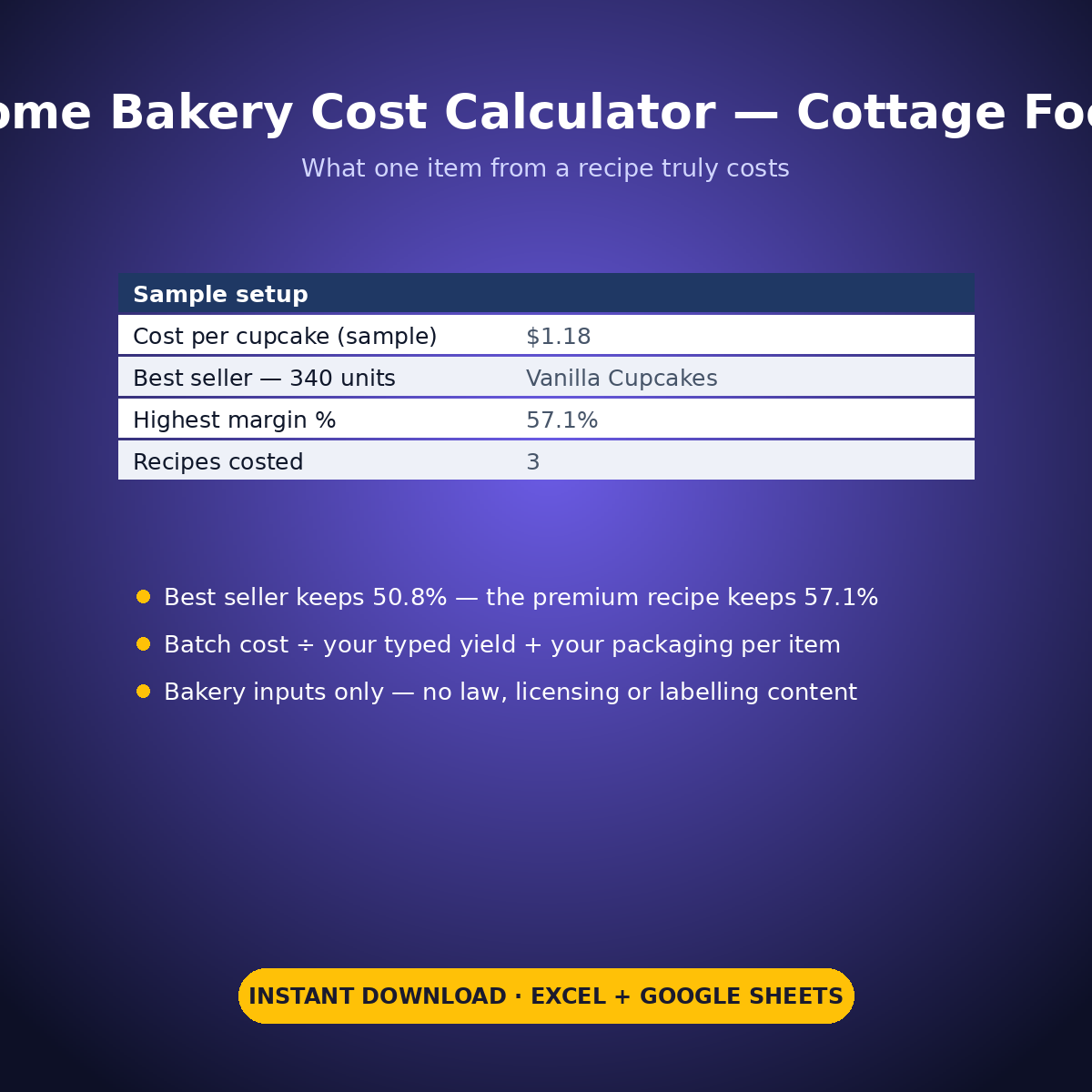
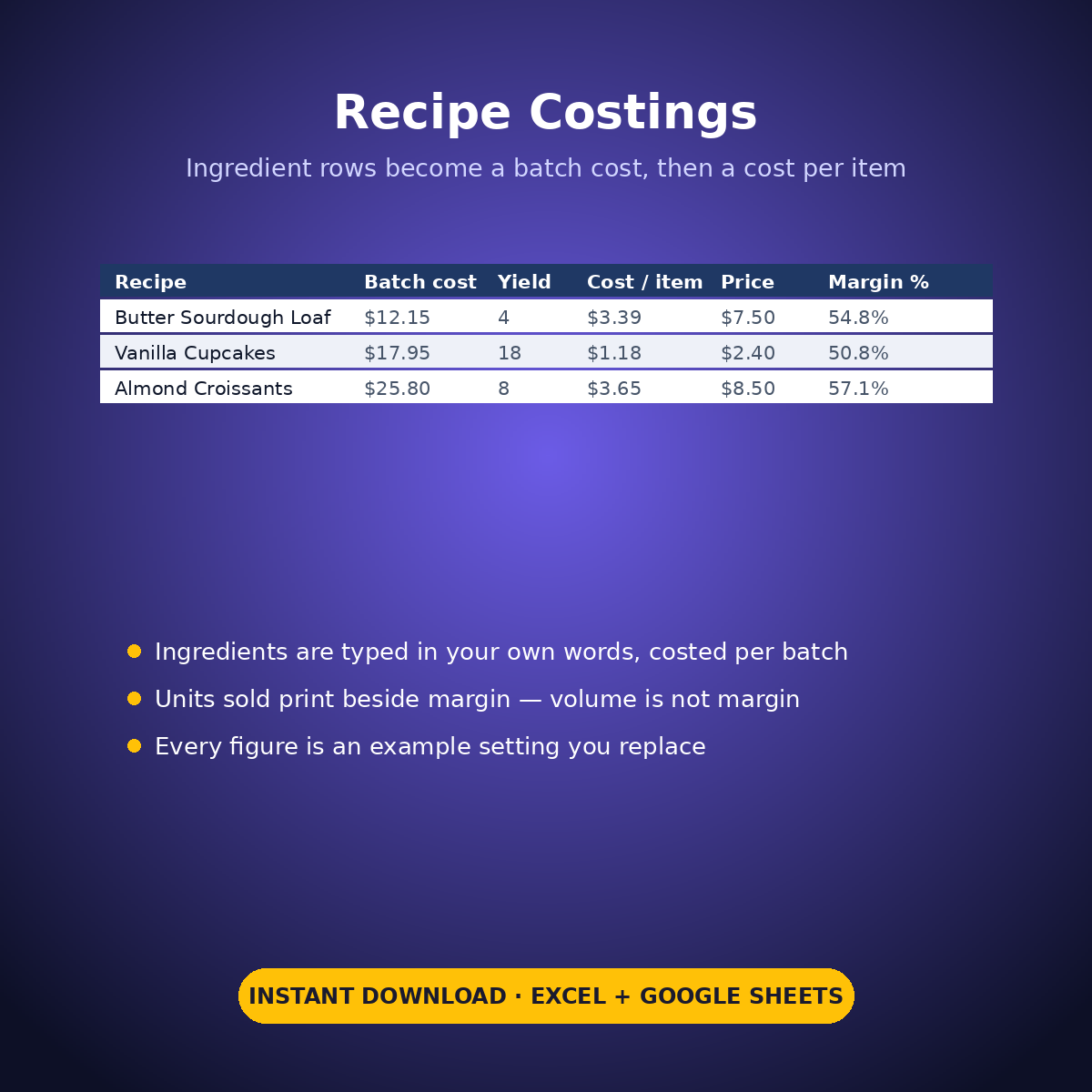
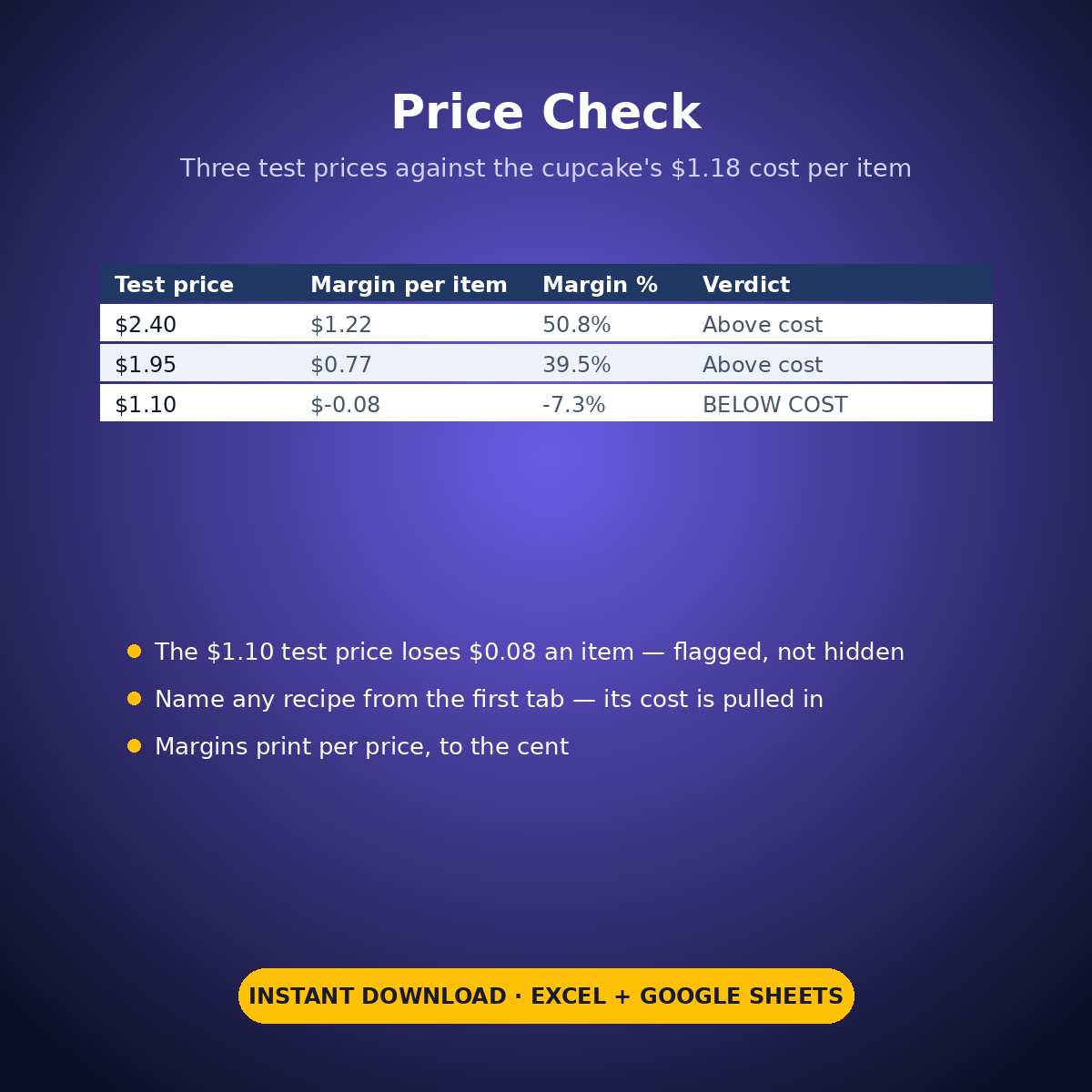
The sample costs three recipes end to end. The Butter Sourdough Loaf’s batch costs $12.15 and yields 4 loaves at $3.39 an item all-in; at $7.50 it keeps $4.11 — 54.8%. The Vanilla Cupcakes are the best seller by far at 340 units, cost $1.18 an item, and keep 50.8% at $2.40. The Almond Croissants are the premium line — $3.65 an item, $8.50 selling price — and keep 57.1%, the highest margin on the tab: the best seller and the best margin are different recipes, and the sheet prints both. The Price Check tests three prices against the cupcake’s $1.18 cost: $2.40 keeps $1.22, $1.95 keeps $0.77, and $1.10 loses $0.08 an item — flagged BELOW COST in the open.
This is a cost calculator only. It states no cottage-food law, licensing, labelling or permit rules for any jurisdiction — it does arithmetic on the ingredient costs you type, and nothing else.
HOW IT WORKS
– ‘Recipe Costings’: type each recipe’s ingredient rows (ingredient in your own words, cost for the batch). The batch cost totals itself; in the summary, type the yield and packaging per item and the cost per item calculates.
– Type each recipe’s selling price and units sold: margin and margin % print per recipe, and the tab names the best seller by units and the highest margin %.
– ‘Price Check’: name one recipe and test up to three of your own selling prices against its cost per item — margin per price, with any price below cost flagged.
WHAT’S INSIDE
– A per-recipe batch cost build from typed ingredient rows — nothing pre-set, nothing assumed
– Cost per item by explicit arithmetic: batch cost ÷ typed yield + typed packaging per item
– The honest split, printed: the best seller (340 units) keeps a LOWER margin % than the premium recipe (50.8% vs 57.1%)
– A three-price check with a below-cost price flagged plainly (sample: $1.10, -$0.08)
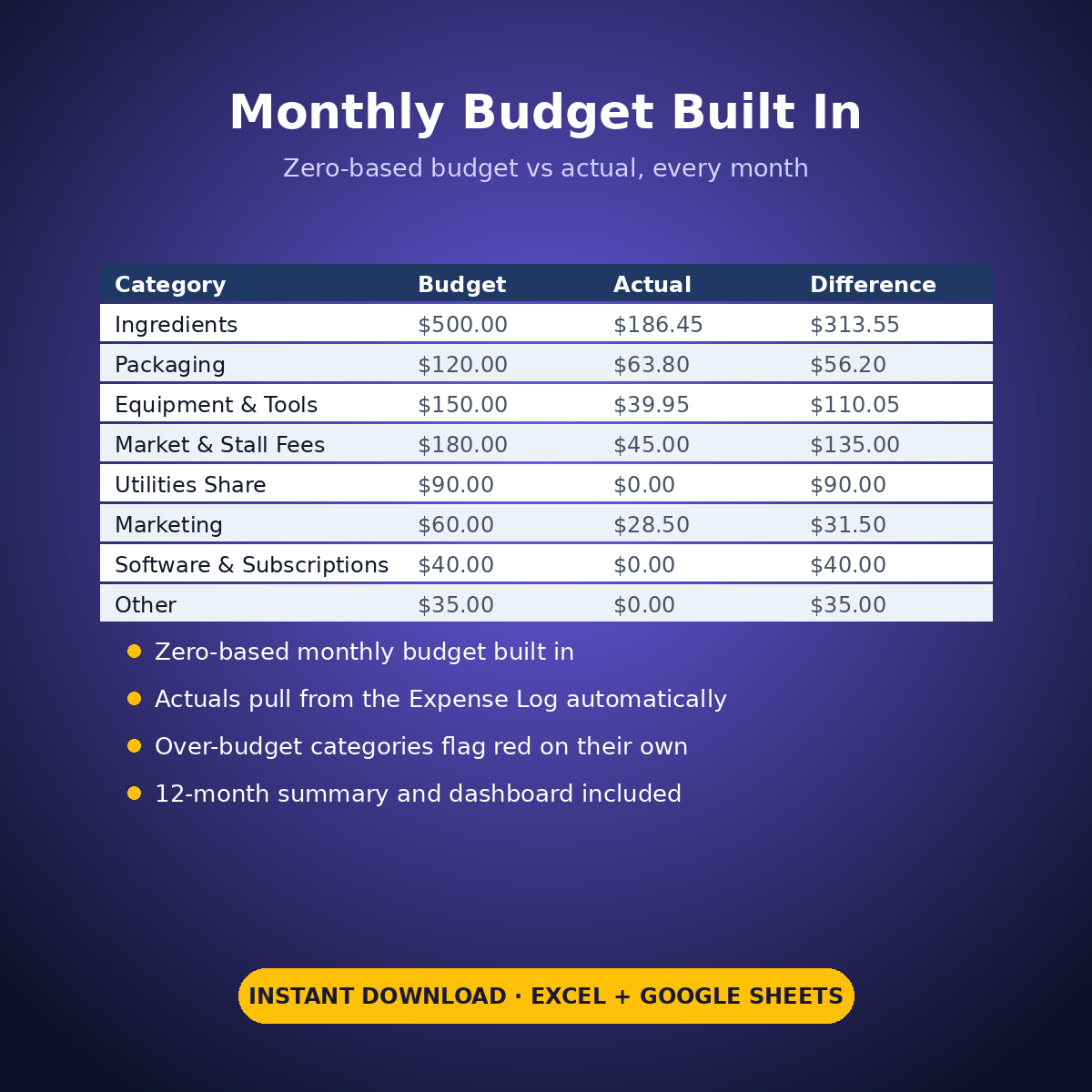
– Plus the standard Expense Log, zero-based Monthly Budget, Dashboard and Monthly Summary tabs
Every ingredient cost, yield, packaging cost and price in this workbook is an example setting you type — the sheet does arithmetic on your figures only, and never tells you what to charge.
How it works: the seven tabs are Start Here (your settings + step-by-step), the two feature tabs, Expense Log, Monthly Budget (zero-based), Dashboard and Monthly Summary. Yellow cells are the only places you type — every yellow value is your own entry. Formula cells are locked (password: sheetdaily, disclosed on the Start Here tab) and every formula is error-wrapped, so an untouched sheet reads blank instead of showing error codes. Instant download, ready for Excel and Google Sheets.
A note on the sample data: every price and date in this workbook is example data, typed in by hand to show you how the sheet behaves. Replace it with your own.

Reviews
There are no reviews yet.